Understanding Containerized Water Treatment Systems
As global water scarcity and pollution continue to rise, the need for efficient and flexible water treatment solutions has never been more pressing. Containerized water treatment systems have emerged as a revolutionary alternative to traditional water treatment methods. These modular systems offer a unique approach that adapts to various environments, ensuring safe drinking water is accessible, even in remote or challenging conditions.
What Are Containerized Water Treatment Systems?
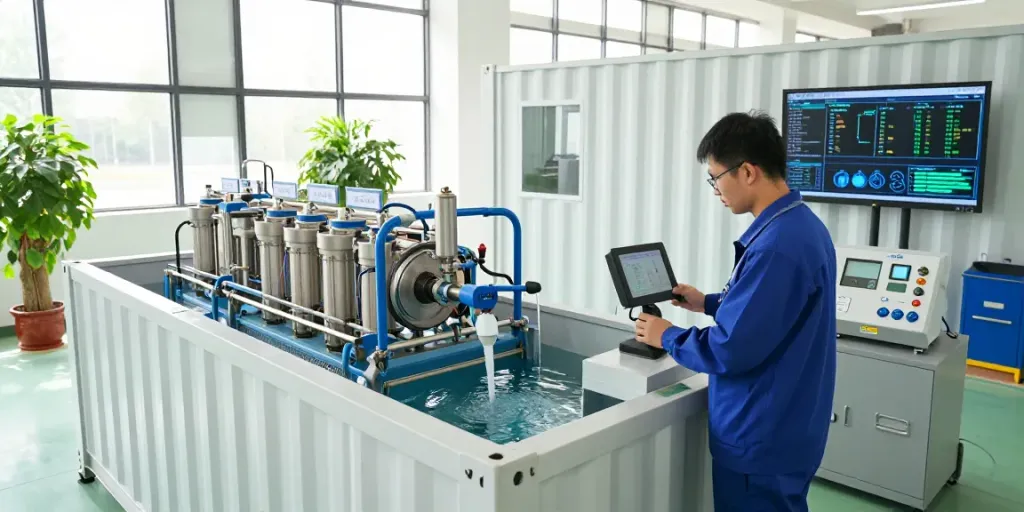
Containerized water treatment systems are self-contained units designed to treat water efficiently within a compact space. Typically housed in ISO shipping containers, these systems integrate multiple water treatment technologies into a modular format, allowing for rapid deployment and flexibility. The primary advantage lies in their ability to be relocated and reused, making them ideal for various applications, from municipal projects to industrial and remote settings.
Key Benefits Over Traditional Systems
Compared to traditional water treatment systems, containerized solutions boast several notable advantages:
- Speed of Deployment: Deployment can take as little as 3 to 7 days, compared to the 3 to 6 months typical of traditional systems.
- Space Efficiency: Containerized systems require significantly less space, decreasing the floor area needed for installation by up to 50%.
- Quality Control: Factory-prefabricated components undergo standardized inspections, ensuring consistent quality and performance.
- Intelligent Monitoring: Equipped with real-time monitoring and remote operation capabilities, these systems ensure optimal performance and quick response to any issues.
- High Reusability Rates: With a reusability rate exceeding 90%, these systems can be easily relocated as needed.
- Resource Recycling: Containerized systems can support reclaimed water reuse, achieving resource recycling rates of up to 80%.
Applications in Various Industries
Containerized water treatment systems find application across diverse sectors. Here are a few examples:
- Municipal Water Treatment: Local governments can use these systems to quickly provide potable water in urban and rural settings.
- Industrial Use: Industries like pharmaceuticals and manufacturing rely on high-purity water, which containerized systems can efficiently produce.
- Disaster Relief: In disaster-stricken areas, containerized systems can be deployed to restore access to clean water swiftly.
- Remote Locations: Mining and oil extraction operations often require potable water solutions, which containerized systems can provide in off-the-grid locations.
Critical Components of Containerized Systems
Main Filtration Technologies Used
Containerized water treatment systems utilize various filtration technologies, including:
- Reverse Osmosis (RO): A popular method for producing high-purity water by removing dissolved salts and impurities.
- Ultrafiltration (UF): An effective technique for separating macromolecules and larger particles from water.
- Activated Carbon Filtration: Used to remove chlorine, taste, and odor from water.
Modular Design and Adaptability
The modular design of containerized systems allows for easy customization and scalability, which is vital for adapting to specific water treatment needs. Companies can mix and match different filtration units based on the quality of the incoming water and the desired output, providing a tailored solution that traditional fixed systems cannot match.
Integration of Smart Technology for Monitoring
Modern containerized systems often come equipped with smart technology that enables real-time monitoring of water quality and system performance. This includes remote access through mobile applications or centralized control systems, allowing operators to manage their water treatment processes effectively, reducing downtime and maintenance costs.
Challenges in Implementing Containerized Systems
Common Misconceptions About Containerized Solutions
Despite their advantages, several misconceptions exist regarding containerized water treatment systems. For instance, some believe these systems are only suitable for small-scale applications, while in reality, they can be deployed in large-scale municipal projects as well.
Regulatory Compliance and Standards
Adhering to local and international regulations can pose a challenge for containerized systems. Manufacturers must ensure their products meet stringent water quality standards, and operators need to stay informed about relevant compliance issues.
Addressing Maintenance and Operational Issues
While containerized systems are designed for efficiency, they still require regular maintenance checks to ensure optimal performance. Operators must be trained to handle potential operational issues, including filter replacements and monitoring system parameters.
Best Practices for Deployment
Steps for Effective Site Preparation
Proper site preparation is crucial for the successful deployment of containerized water treatment systems. Key steps include:
- Conducting a comprehensive site assessment to ensure compatibility with the system requirements.
- Preparing a stable and flat ground area for container placement.
- Ensuring access to required utilities, including water, power, and waste disposal.
Streamlining the Installation Process
To minimize installation time, pre-assembled systems can significantly reduce on-site construction needs. Employing a skilled installation team can facilitate a smoother setup, ensuring all components are correctly connected and calibrated.
Training Staff for Optimal Operation
Training personnel on the proper operation and maintenance of containerized systems is essential. Regular training sessions should be conducted to keep staff updated on any technological advancements and best practices.
The Future of Containerized Water Treatment
Emerging Trends and Innovations for 2026
As we move toward 2026, several trends are expected to shape the future of containerized water treatment systems:
- Increased Automation: Greater reliance on AI and machine learning for process optimization.
- Sustainability Focus: Enhanced resource recycling capabilities will become critical as environmental concerns grow.
- Integration with Renewable Energy: Utilizing solar or wind energy for powering operations, thus reducing carbon footprints.
Case Studies of Successful Implementations
Numerous successful case studies highlight the effectiveness of containerized water treatment systems:
- Rural Community Projects: Implementations in rural areas have successfully provided clean drinking water, improving public health and local economies.
- Disaster Relief Efforts: In regions affected by natural disasters, containerized systems have been instrumental in quickly restoring access to potable water.
How to Measure Performance and Effectiveness
To evaluate the performance of containerized water treatment systems, key metrics such as water quality output, operational uptime, and maintenance frequency should be regularly assessed. Utilizing data analytics can enhance understanding and improve system performance over time.